
Technical Skills
Core Competencies
Featured Projects
Developed a group project Android app using Java, Firebase, and REST API, providing AI-powered features with real-time data synchronization and seamless user interaction.
Developed a fully functional individual full-stack online booking website using HTML, CSS, JavaScript, and PHP for seamless user experience and booking management.
Developed a group project using Java Swing and SQL for creating an educational management system with intuitive user interface and robust data management.
Education
Professional Skills Development
Core Concepts
- Employability Skills: Essential competencies required for workplace success and career advancement
- Professional Communication: Effective verbal and written communication in workplace contexts
- Leadership & Teamwork: Collaborative skills and leadership capabilities for team environments
- Problem-Solving: Critical thinking and analytical skills for workplace challenges
- Professional Ethics: Understanding workplace values, beliefs, and ethical standards
Personal Reflection
This foundational module opened my eyes to the critical importance of soft skills in professional success. I learned that technical expertise alone isn't sufficient; employers value candidates who can communicate effectively, work collaboratively, and adapt to changing workplace dynamics.
The emphasis on professional ethics and workplace values helped me understand that being a professional extends beyond job responsibilities to encompass integrity, reliability, and respect for colleagues. This module laid the groundwork for my understanding of what it means to be a well-rounded professional in today's competitive job market.
Core Concepts
- Portfolio Types: Personal, Career/Dossier, Employment, and Assessment portfolios for different purposes
- PEAKS Framework: Personal Characteristics, Experience, Accomplishments, Knowledge, and Skills organization
- Master vs Targeted: Comprehensive collection versus specific, opportunity-focused portfolios
- Digital Formats: Web-based, PPT, Word documents, websites, blogs, and interactive presentations
- Reflection Process: "What? So what? Now what?" framework for continuous learning and improvement
Personal Reflection
Learning about portfolio management transformed my understanding of professional presentation. The PEAKS framework provided a systematic approach to organizing my achievements and experiences, helping me see patterns in my growth and identify areas for development.
The distinction between master and targeted portfolios was particularly valuable, teaching me to maintain a comprehensive collection while being strategic about what to present for specific opportunities. The reflection process has become an integral part of my learning journey, helping me extract meaningful insights from every experience and plan future actions effectively.
Detailed Session Learning
Core Concepts
- Proposal Types: External (bid for a contract) and Internal (persuade within an organization)
- External Components: Executive Summary, Management Section, and Financial Section
- Internal Planning: Audience analysis, defining the problem, and presenting a viable solution
- Structural Framework: Introduction (Purpose, Problem, Background), Discussion (Problem, Solution, Context), and Summary
- Core Purpose: To secure acceptance of an idea by persuading the reader
Personal Reflection
Learning the formal structure of project proposals has given me a clear roadmap for turning ideas into actionable plans. Understanding the critical distinction between external and internal proposals was a key insight, as it taught me to tailor the tone, content, and emphasis based on whether I'm seeking a contract or advocating for internal change.
The breakdown of the proposal's components, especially the need for a strong management section to establish credibility and a detailed financial section for transparency, showed me that a successful proposal is more than just a good idea—it's a demonstrably viable plan. This knowledge is directly applicable to my academic projects and future career, empowering me to confidently propose and advocate for initiatives.
Core Concepts
- CV Purpose: A marketing document designed to secure an interview by showcasing qualifications and suitability for a specific role
- Tailoring is Key: A CV must be customized for each job application, aligning with the job description and company needs
- ATS Optimization: Using keywords from the job description is crucial to pass through Automated Applicant Tracking Systems
- Essential Structure: Personal Information, Professional Summary, Work Experience (with quantifiable achievements), Education, Skills, and Achievements
- Professional Presentation: A clean layout, consistent formatting, and error-free writing are non-negotiable for making a positive first impression
Personal Reflection
This module transformed my understanding of a CV from a static list of jobs into a dynamic, targeted marketing tool. The most significant takeaway was the critical importance of tailoring. I now see that a generic CV is easily overlooked, and the process of researching a company and dissecting a job description to identify keywords is an essential first step in any application.
Learning to structure my experience using action verbs and quantifiable achievements (e.g., "increased efficiency by 15%") rather than just listing duties has empowered me to articulate my impact more powerfully. The emphasis on a clean, professional format and the stern warning against grammatical errors have instilled in me the discipline to proofread meticulously. I now feel equipped to craft a compelling CV that doesn't just list my history but actively argues for my value as a candidate.
Core Concepts
- The 93% Rule: The overwhelming importance of non-verbal communication (body language 55%, tone 38%) over words alone (7%)
- The Interview Strategy: A proactive approach based on three key questions: What do I want them to know? What weaknesses do I minimize? What do I need to know about them?
- The STAR/Evidence Method: Structuring answers by outlining a Situation, Task, Action, and Result to provide concrete evidence of skills
- The 6 C's of Communication: Being Clear, Concise, Correct, Complete, Concrete, and Courteous during responses
- The Dual Purpose: An interview is a two-way conversation for both the employer to assess the candidate and the candidate to assess the job
Personal Reflection
This module was a powerful reminder that an interview is a performance, not just an interrogation. The statistic that 93% of communication is non-verbal was a revelation; it shifted my focus from memorizing perfect answers to practicing my tone, eye contact, and posture. I now understand that how I deliver an answer is as critical as the answer itself.
Learning to structure my responses using the evidence-based method (situation, action, result) has given me a clear framework to transform my experiences into compelling stories. It moves me from saying "I'm a good leader" to proving it with a specific example. The contrast between successful and unsuccessful candidates highlighted the tangible difference that research, enthusiasm, and using specific jargon can make. I feel more equipped to not just answer questions, but to engage in a professional conversation that demonstrates my fit for the role.
Core Concepts
- Meeting Terminology: Mastering specific vocabulary (e.g., agenda, minutes, chairperson, action items) is fundamental to participating effectively
- Purpose & Preparation: Every effective meeting starts with a clear purpose, desired outcome, and a detailed plan (agenda, attendees, logistics)
- Structured Participation: Effective contribution involves specific language functions: stating opinions, asking for clarification, agreeing/disagreeing politely, and making suggestions
- Roles and Responsibilities: Understanding different meeting roles (Chair, Secretary, Participant) clarifies expectations and ensures the meeting runs smoothly
- Active Facilitation: A good facilitator manages time, encourages participation from all attendees, and keeps the discussion focused on the agenda
Personal Reflection
This module provided a systematic framework for understanding meetings as structured professional events, not just conversations. I now appreciate that the key to a successful meeting lies in its preparation; a clear agenda and defined objectives are essential to avoid wasted time. Learning the specific terminology and phrases for contributing (e.g., "If I could just come in here...", "I'd like to propose that...") has given me a toolkit to express my ideas clearly and confidently in a group setting.
The breakdown of different meeting types and roles demystified the process, showing me that effective participation is an active skill. I understand that being a valuable attendee means more than just listening—it involves preparing in advance, engaging constructively, and respecting the facilitated structure. This knowledge is directly applicable to my group projects and will be crucial for my future career, empowering me to both contribute to and lead productive meetings.
Core Concepts
- Professional Persona: An email is a direct reflection of your professionalism, from the address itself (e.g., first.last@email.com) to the tone and structure
- The Email Anatomy: Every professional email must have a clear and specific Subject Line, a formal Greeting (Dear Mr./Ms./Dr. Last Name), a concise and polite Body, a courteous Closing (Best, Sincerely), and your Full Name
- Tone is Key: Professional communication requires politeness, courtesy, and the use of modal verbs (e.g., "Would it be possible...?", "I was wondering if...") to make requests, not demands
- The Pre-Send Checklist: A critical final step to avoid errors, including checking the recipient's name, ensuring a professional tone, using spell check, and confirming that all questions have been answered
- Purpose-Driven Writing: Different scenarios (thank you, apology, request, follow-up) require tailored templates and approaches, but all must maintain a formal and respectful structure
Personal Reflection
This module fundamentally changed my perception of email from a simple messaging tool to a primary instrument of professional self-presentation. The emphasis on a professional email address and the breakdown of each component (especially the critical importance of a specific subject line) provided a clear, actionable framework. I now understand that a poorly structured email can inadvertently signal a lack of experience or care.
The most valuable lesson was on tone. Learning to rephrase statements from demanding ("I want to know") to polite and collaborative ("I was wondering if you could advise...") is a crucial skill for building positive professional relationships. The "Pre-Send Checklist" is a habit I have immediately adopted to prevent careless mistakes. This knowledge is essential not only for academic communication with professors but as a cornerstone of my future career interactions, ensuring I present myself as competent, respectful, and detail-oriented from the very first point of contact.
Core Concepts
- Purpose & Culture: Showcases local, regional, and international cuisines while celebrating cultural heritage.
- Organization: Requires event planning, vendor coordination, sponsorship, and audience engagement.
- Diversity: Highlights food varieties, fusion cuisines, and traditional dishes.
- Experience Design: Involves live cooking shows, competitions, tastings, and entertainment to attract participants.
- Sustainability: Emphasis on reducing food waste, promoting local produce, and eco-friendly practices.
- Food Eating Professional (Competitive Eating / Culinary Experience)
- Skill Development: Eating techniques, speed, endurance in competitive eating.
- Health Awareness: Balancing practice with health and nutrition considerations.
- Professional Identity: Building a personal brand through competitions, media appearances, or food reviews.
- Opportunities: Sponsorships, influencer roles, social media presence, and participation in global contests.
- Ethics & Safety: Maintaining professionalism, safe practices, and respect for cultural food values.
Personal Reflection
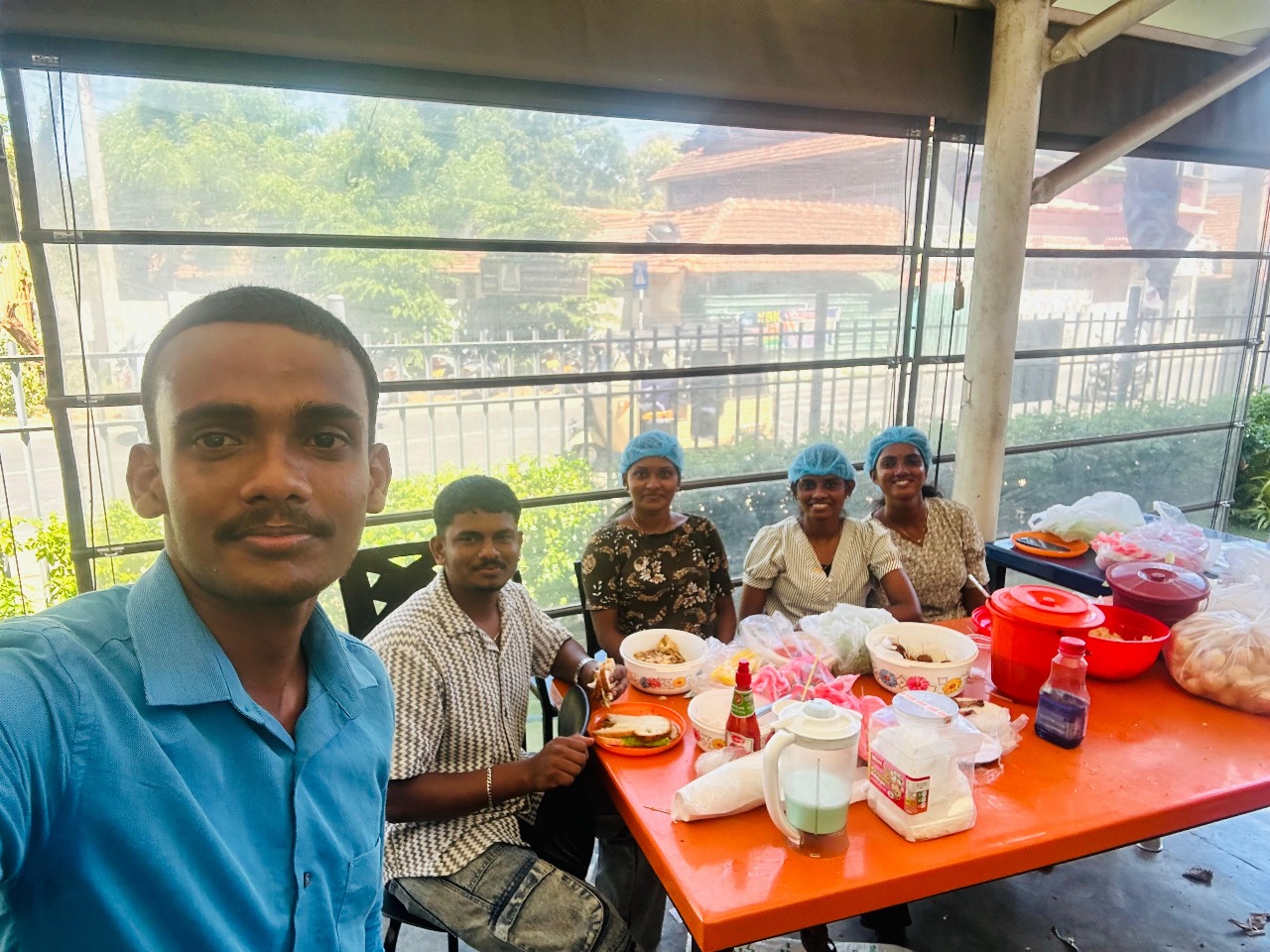

Core Concepts
- You Are the Company: On a phone call, your voice and manner represent the entire organization. The caller's perception of the company is formed by this single interaction
- The Power of Tone and Language: Since non-verbal cues are absent, tone of voice (smiling while speaking) and polite, professional language ("May I," "Would you please") are critical for conveying respect and building rapport
- Structured Call Handling: Professional call management involves a clear greeting (department and name), always asking permission before placing on hold, checking back frequently, and taking complete, accurate messages
- Proactive Problem-Solving: The goal is to take responsibility for the caller's need, not to transfer the problem. This involves listening actively, expressing a willingness to help, and following through on promises
- Respect for Time: This applies to both the caller's time (answering promptly, minimizing hold time) and your own (being prepared for outbound calls, returning messages within one business day)
Personal Reflection
This module highlighted that telephone communication is a professional performance requiring specific skills, not just a casual conversation. The most impactful concept was that I am the company's representative the moment I answer a call; this instills a sense of responsibility for creating a positive impression. I now understand the critical importance of tone and language choice in compensating for the lack of visual cues.
The simple act of smiling while speaking to project warmth is a technique I can immediately implement. The guidelines for handling difficult situations—like never saying "That's not my job" and instead focusing on what I can do to help—provide a powerful framework for turning frustrated callers into satisfied contacts. The detailed protocols for placing calls on hold, transferring, and taking messages have given me a clear, actionable checklist for professional call management. This knowledge is essential for any professional setting, ensuring that I handle telephone interactions with the same level of competence and courtesy as face-to-face communication.
Core Concepts
- EQ vs. IQ: Emotional Intelligence (EQ) is the ability to recognize, understand, and manage emotions in oneself and others. Unlike IQ, which is largely fixed and measures cognitive ability, EQ is a flexible skill that can be developed and improved throughout life
- The Four Pillars: High EQ is built on four key skills: Self-Awareness (knowing your own emotions), Self-Management (controlling your responses), Social Awareness (reading the room and empathizing), and Relationship Management (handling interactions effectively)
- The Brain's Role: Emotional responses are governed by the amygdala (the reactive, emotional center) and managed by the prefrontal cortex (the rational, control center), which doesn't fully mature until around age 25
- Critical for Success: While IQ predicts academic performance, EQ is a stronger predictor of long-term success in life and career, especially in leadership, teamwork, and navigating social complexities
- A Developable Skill: Low EQ manifests as poor stress management, difficulty with relationships, and an inability to handle feedback. However, it can be improved through mindfulness, understanding triggers, and practicing empathy and active listening
Personal Reflection
Learning about Emotional Intelligence was a revelation, reframing "being emotional" not as a weakness but as a critical source of data and a skill to be mastered. The distinction between IQ and EQ was particularly powerful, shifting my focus from purely academic intelligence to the emotional skills that truly drive professional success and healthy relationships.
Understanding the neurological battle between the amygdala and the prefrontal cortex gave me a scientific framework for my own reactions. It normalizes the feeling of being "hijacked" by emotion while providing a clear goal: to strengthen the mindful pause between stimulus and response. The four pillars of EQ (self-awareness, self-management, social awareness, relationship management) provide a practical roadmap for personal development. This knowledge is profoundly applicable. It's not just about "being nice"; it's about the strategic advantage of building stronger teams, navigating conflict, and leading with empathy. I now see improving my EQ as one of the most impactful investments I can make in my personal well-being and my future career, equipping me to connect with others and manage myself more effectively in any situation.